
Male or Female Shiba Inu: Which Should You Choose?
By Jekaterina GelfondPublished
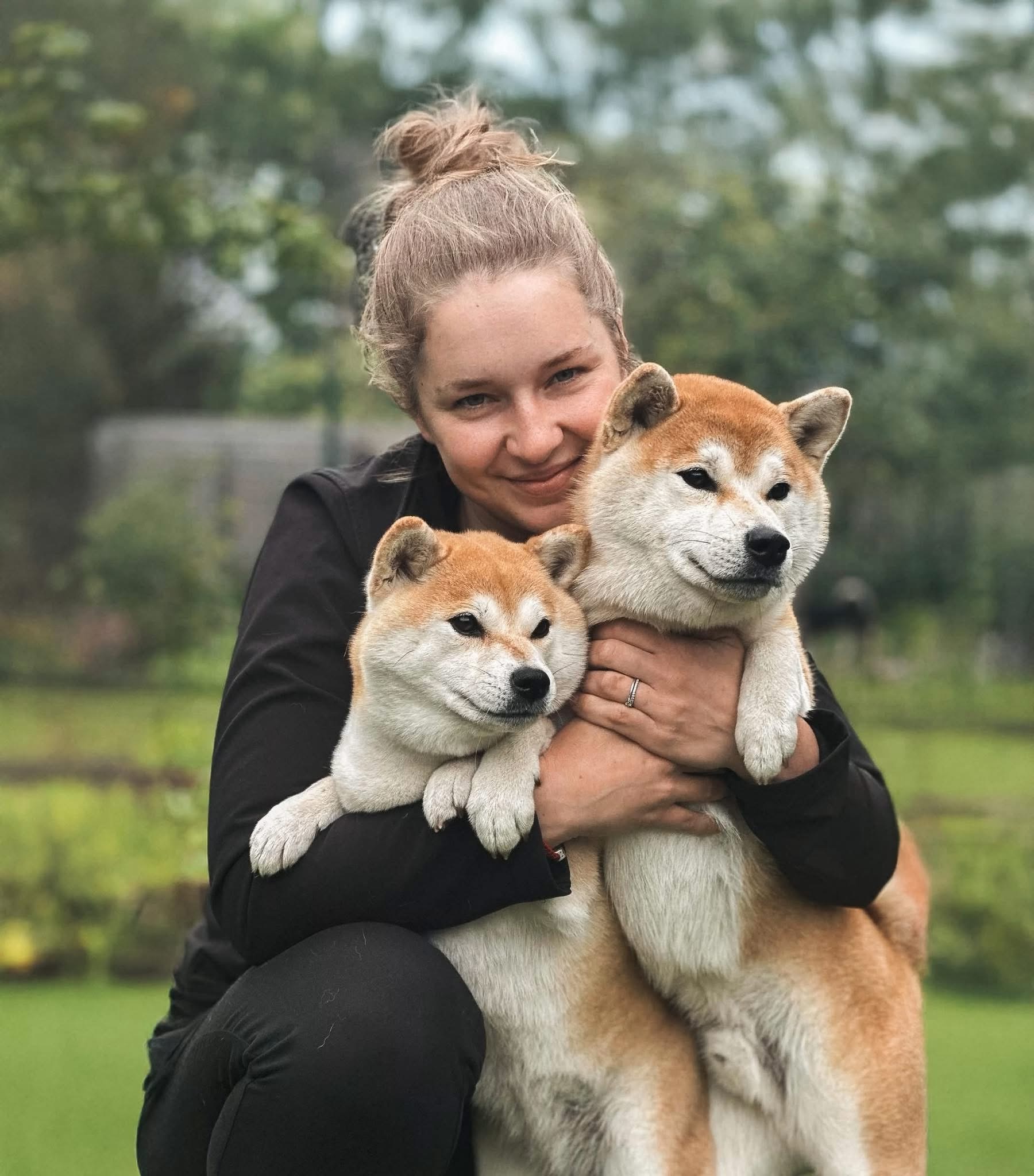
When people are choosing a Shiba Inu puppy, they often ask whether they should get a male or a female. There’s a common idea that males are more stubborn and active, while females are calmer, easier to train and more attached to their owners. In practice, it’s rarely that simple.
Shibas have distinct personalities. Each dog has their own temperament, habits and ways of behaving. Still, there are some differences worth considering before you bring a puppy home, including appearance, reproductive cycles, behaviour around puberty and a few practical aspects of day-to-day care.
How do male and female Shiba Inus look different?
Shiba Inus show clear sexual dimorphism, meaning adult males and females should look recognisably different. The FCI breed standard gives a shoulder height of 39.5 cm for males and 36.5 cm for females, with a tolerance of 1.5 cm either way.
Male Shiba Inus
Males usually have a sturdier build, heavier bone, a broader head and more pronounced muscles. Their features tend to look more masculine, and the coat around the neck can look almost like a small mane. An adult male can have a striking presence while still being compact and well proportioned.
Female Shiba Inus
Females are typically smaller and more lightly built. They tend to have finer features, lighter bone and a more feminine expression. A female Shiba should still look sturdy and balanced. Good proportions and well-developed muscles matter in both sexes.
Do male and female Shiba Inus differ in temperament?
Temperament is one of the most important things to consider when choosing a companion, and it’s also where there are the most stereotypes. Many people expect a female to be more affectionate and easier to live with, only to find that a particular male suits them better. We’ve written separately about Shiba Inu temperament and what it looks like in everyday life.
Male Shiba Inu temperament
Males can be outgoing, playful and expressive with their owners. Some keep their puppyish enthusiasm as adults. Many are affectionate dogs who enjoy attention, physical contact and spending time with their people.
Around puberty, males may become more interested in scents, other dogs and marking on walks. Some may also compete more with other males. How strongly this shows up depends a great deal on the individual dog, their socialisation and training.
Female Shiba Inu temperament
Females may mature behaviourally a little sooner. Some are independent, selective about who they interact with and quick to notice what’s happening around them. A female can be every bit as determined or independent as a male. There’s no guarantee she’ll be calmer or more responsive to training.
Some females seek out affection and company. Others prefer to have a little space. When choosing a puppy, consider the individual temperament alongside sex, since the puppy in front of you may be quite different from what you expected.
Key differences between males and females
| Trait | Male | Female |
|---|---|---|
| Height under the FCI standard | 38–41 cm | 35–38 cm |
| Build | Typically sturdier | Typically lighter |
| Appearance | Masculine | Feminine |
| Behavioural maturity | May come later | May come earlier |
| Scent marking | Usually more common | Usually less common |
| Seasons | No | Yes, if unspayed |
| Bond with the owner | Varies by dog | Varies by dog |
| Trainability | Varies by dog | Varies by dog |
| Activity level | Depends on temperament | Depends on temperament |
| Behaviour around children | Depends on temperament and socialisation | Depends on temperament and socialisation |
Which is easier to train, a male or a female?
There’s no reliable rule that says one is easier to train than the other. Shibas are clever and independent. They can learn quickly, but they don’t always respond to a cue simply to please you. Find what motivates your dog, build a relationship based on trust and be consistent about what you ask of them.
Training goes better when you take into account:
- the dog’s individual temperament;
- inherited traits;
- early socialisation;
- consistency from the owner;
- rewards that motivate the dog;
- regular practice;
- clear rules from the first days at home.
With the right approach, a male or a female can become a well-mannered companion. The temperament of the particular puppy will tell you more about what training may be like than their sex will.
What is it like to care for a male or female Shiba Inu?
Beyond looks and temperament, it’s worth thinking about reproductive differences. These often affect everyday life more than the supposed differences in personality.
Living with a male
Unneutered males may pay more attention to females in season. Some become restless, find it harder to focus on walks or temporarily lose interest in food. Males also tend to scent mark more often. Marking outdoors doesn’t necessarily mean a dog will do it indoors. Training, the home setup and established habits all matter. Males don’t have regular reproductive cycles, which some owners find easier to manage.
Living with a female
Unspayed females usually come into season once or twice a year, though it varies by dog. During a season, keep a closer eye on your dog on walks, prevent unwanted contact with males and pay attention to hygiene. Some females experience a false pregnancy after a season, which can bring physical and behavioural changes.
Discuss whether and when to spay or neuter your dog with your vet. Consider the dog’s age, health and development when making that decision.
Which gets on better with other dogs?
If you already have a dog, the sex of your next puppy can matter. In many cases, dogs of opposite sexes settle together more easily. Two males or two females can also live together, though rivalry may be more likely, especially after puberty. Temperament, age, training and how you manage daily life together all affect compatibility.
If you have a cat, the puppy’s sex is usually less important. Both male and female Shibas can live happily with cats, especially with early introductions. Good socialisation, gradual introductions and giving each animal space matter more.
If you keep an unneutered male and an unspayed female together, plan how to manage seasons and prevent an unplanned mating.
Is a male or a female better for a family with children?
Either can suit a family with children. Look for a puppy with a temperament that fits your household, a steady disposition and good early socialisation. Teach children to respect the dog’s space, leave them alone while sleeping or eating, and avoid pulling their fur or forcing contact.
With good training and respectful handling, a Shiba of either sex can be a wonderful family companion. An adult should always supervise interactions between young children and a dog, whatever the dog’s sex or temperament.
Which is better for flat living?
Both can live in a flat. Despite the small difference in size, males and females need much the same exercise, walks, mental stimulation and time with their people. A Shiba can live comfortably without a large house or garden if you give them enough activity and meet their everyday needs.
Shibas are known for keeping themselves clean and can adapt well to city life with training. The size of your flat is less useful when choosing between a male and a female than how much time you can give to walks, training and socialisation.
Should you choose a puppy based on sex alone?
People often come to us already set on a male or a female. Sometimes a puppy of the other sex turns out to fit their lifestyle and expectations much better. If you want an affectionate dog who enjoys company, for instance, a male may suit you just as well as a female.
We recommend looking at the puppy’s confidence, curiosity, sociability, activity level, reaction to new situations and general health. Those details are especially important if this is your first dog or if you have children or other animals. A good breeder watches puppies from birth, knows how each is developing and can help you choose a suitable companion.
How we help you choose a puppy at Akane-Hinata
At Akane-Hinata, our Shiba Inu kennel in Estonia, we pay close attention to breed type, health and temperament. Our breeding dogs have health checks and genetic tests. We aim to preserve the characteristics of the Japanese breed, including sound construction, balanced proportions and a steady temperament.
Our dogs have done well at national and international shows. They include a World Junior Winner and international champions. All our puppies receive official EKL pedigrees recognised by the FCI, and for some litters we can also arrange Japanese NIPPO pedigrees.
We socialise our puppies from an early age, introducing them to household noises, different surfaces, objects and new situations. Watching each puppy develop helps us understand their temperament and help prospective owners choose a companion who fits their lifestyle, experience and preferences.
So, should you choose a male or a female?
There’s no answer that works for everyone. If you like a stronger build and a more masculine look, you might lean towards a male. If you prefer a smaller, lighter build, a female may suit you. Give yourself room to meet individual puppies before deciding based on what you’ve heard about males and females.
Shibas of either sex can be affectionate, independent, playful, quiet or active. What matters is finding the dog who suits you. If you’re looking for a Shiba Inu puppy in Estonia, you can learn about upcoming litters on our puppies page and contact Akane-Hinata for help choosing a puppy.